First Snow Leopard Wild Photographs
Topics—
Latest—

Newly Discovered Monkey Pops Up in Camera Trap Footage

Rare Water Mouse Rediscovered After Almost 100 Years

Striking Photos Reveal the Legacy of Yellowstone’s Wolves

The Hidden Ways Wolves Keep an Ecosystem Healthy
Nat Geo Recommends—
Meet the First New Cat Species Discovered in 100 Years
Topics—
Latest—

Michelangelo and the Tomb that Tormented Him

premium
A Famous Portrait of Anne Boleyn Hides a Strange Secret

premium
Will the Bayeux Tapestry Finally Give Up Its Secrets?
How Sleuths Decoded the Secret Letters of Mary, Queen of Scots

How Sleuths Decoded the Secret Letters of Mary, Queen of Scots
Nat Geo Recommends—
Inside the New Expedition to Find Amelia Earhart's Plane
Topics—
Latest—

England’s Forgotten Castle Trail—And the Woman Behind It

15 Spectacular Journeys by Land, Sea and Sky
Inside the Exclusive-Access Boom in Luxury Travel, From Islands to Palaces

Inside the Exclusive-Access Boom in Luxury Travel, From Islands to Palaces
Musician Kate Nash on Her Irish Heritage and the Reality of Touring

Musician Kate Nash on Her Irish Heritage and the Reality of Touring
Nat Geo Recommends—
Where to Go for a Fall Leaf-Peeping Road Trip
Topics—
Latest—

premium
Rethinking How to Fight the World’s Deadliest Infection

premium
Could the Way You Chew Food Affect Your Dementia Risk?
Can a Controversial Diet Help Treat a Hidden Cause of Migraines?

premium
Can a Controversial Diet Help Treat a Hidden Cause of Migraines?

premium
The Case for Buying Kefir Over Yogurt
Nat Geo Recommends—

Your Neighborhood Could Influence Your Dementia Risk
Science & Nature—
Latest—

Paid Content
From Farm to Future

Life Inside a Sinking City
Scientists Discover a Neuron That May Play a Role in Schizophrenia

premium
Scientists Discover a Neuron That May Play a Role in Schizophrenia

Microplastics Detected in Brazil’s Most Remote Wildlife
Featured—
Watch Nat Geo on Disney+



Watch the Sharkfest collection on Disney+

National Geographic Society—
More—


Premium
See the First Photographs of Snow Leopards in the Wild
Zoologist George Schaller captured one of the rarest of great cats in a private hunting preserve in Pakistan.
Story and photographs by George B. Schaller
This story originally published in the November 1971 issue of National Geographic magazine. This feature is presented as originally created and may contain stereotypes or negative depictions.See more digitized stories from our archives here.
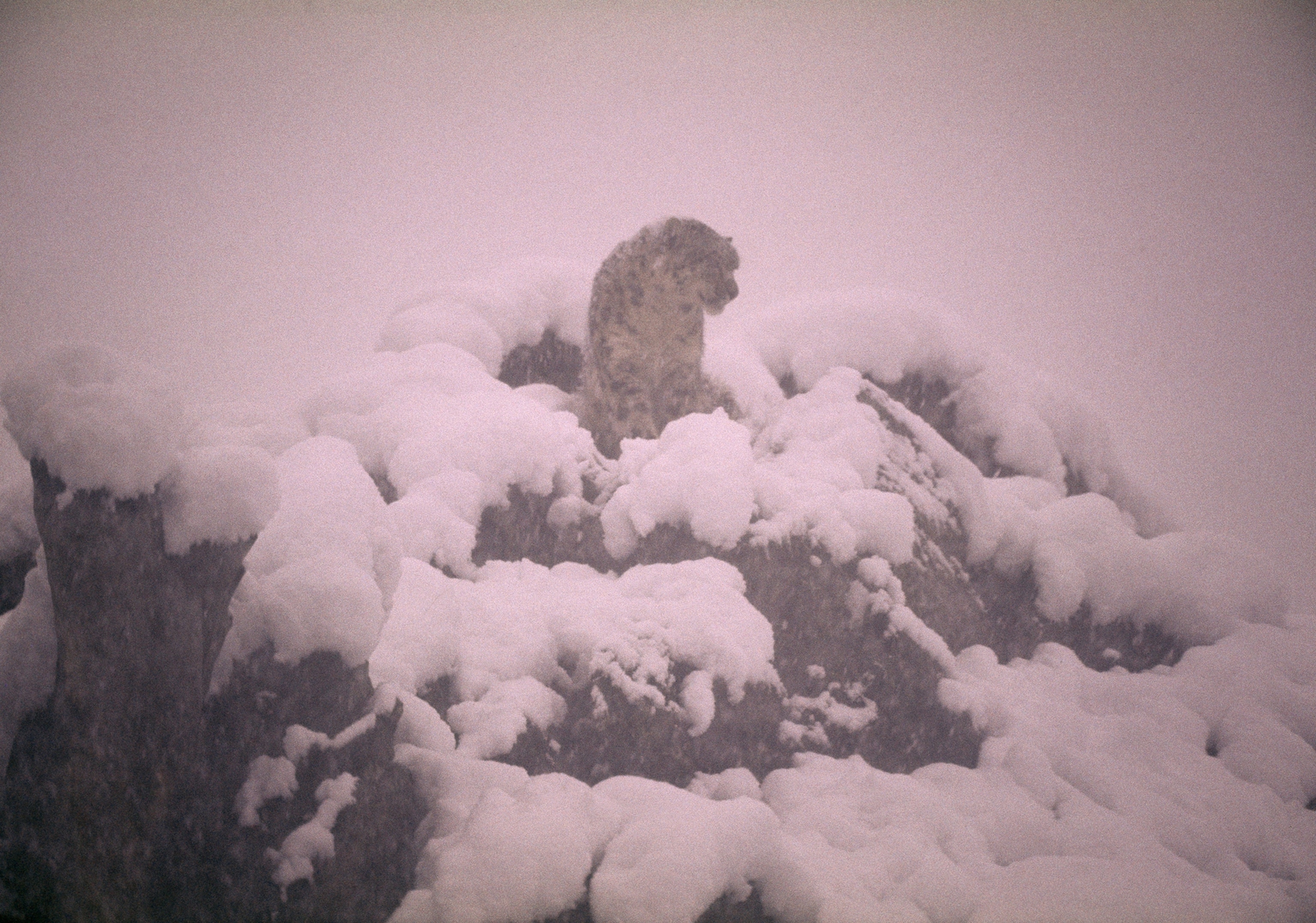
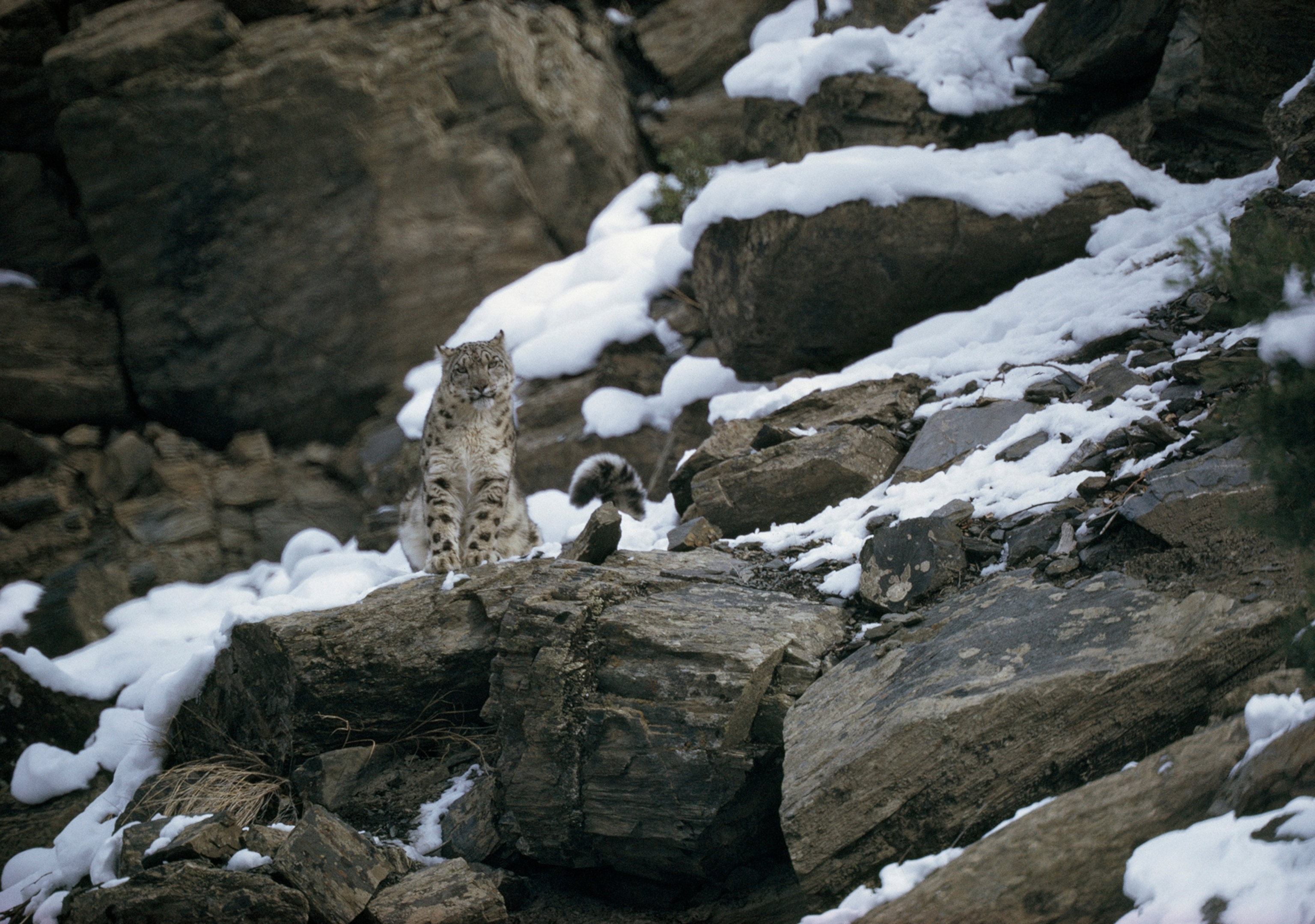
Suddenly I sawthe snow leopard. Wisps of cloud moved between us, and she became a ghost creature, appearing and disappearing as if in a dream. We were 120 feet apart on a rugged Pakistani cliff, neither of us moving—two beings bound to each other in a world of swirling snow. Thus, last December, I glimpsed one of the rarest and least known of the world's great cats.
I had traveled to a private hunting preserve in the Chitral district of northern West Pakistan to survey its wildlife—particularly the Kashmir markhor, a rare wild goat. My associate, Zahid Beg Mirza of Punjab University, and I also hoped to advise His Highness the Mehtar of Chitral, who was turning his preserve into a sanctuary.
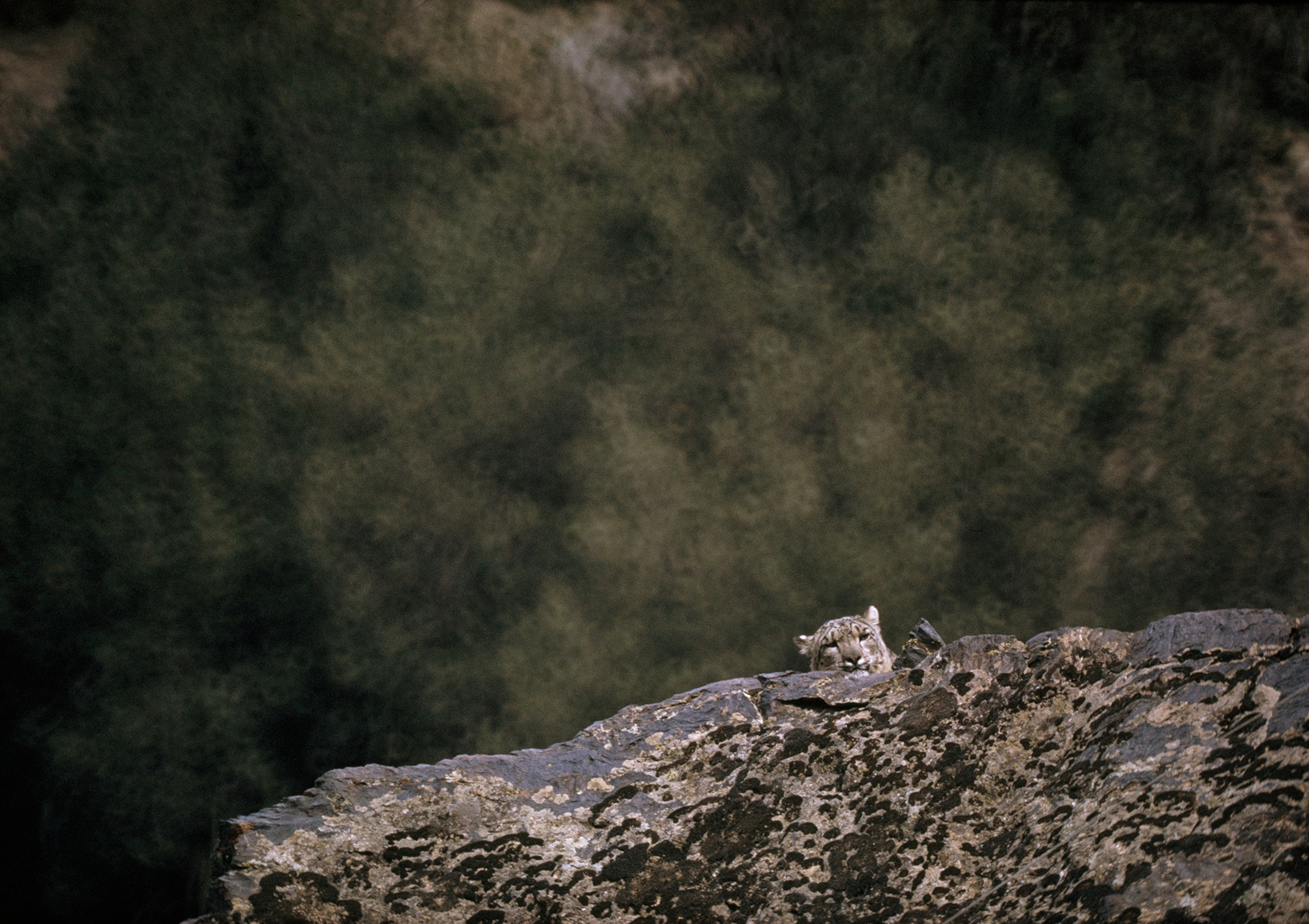
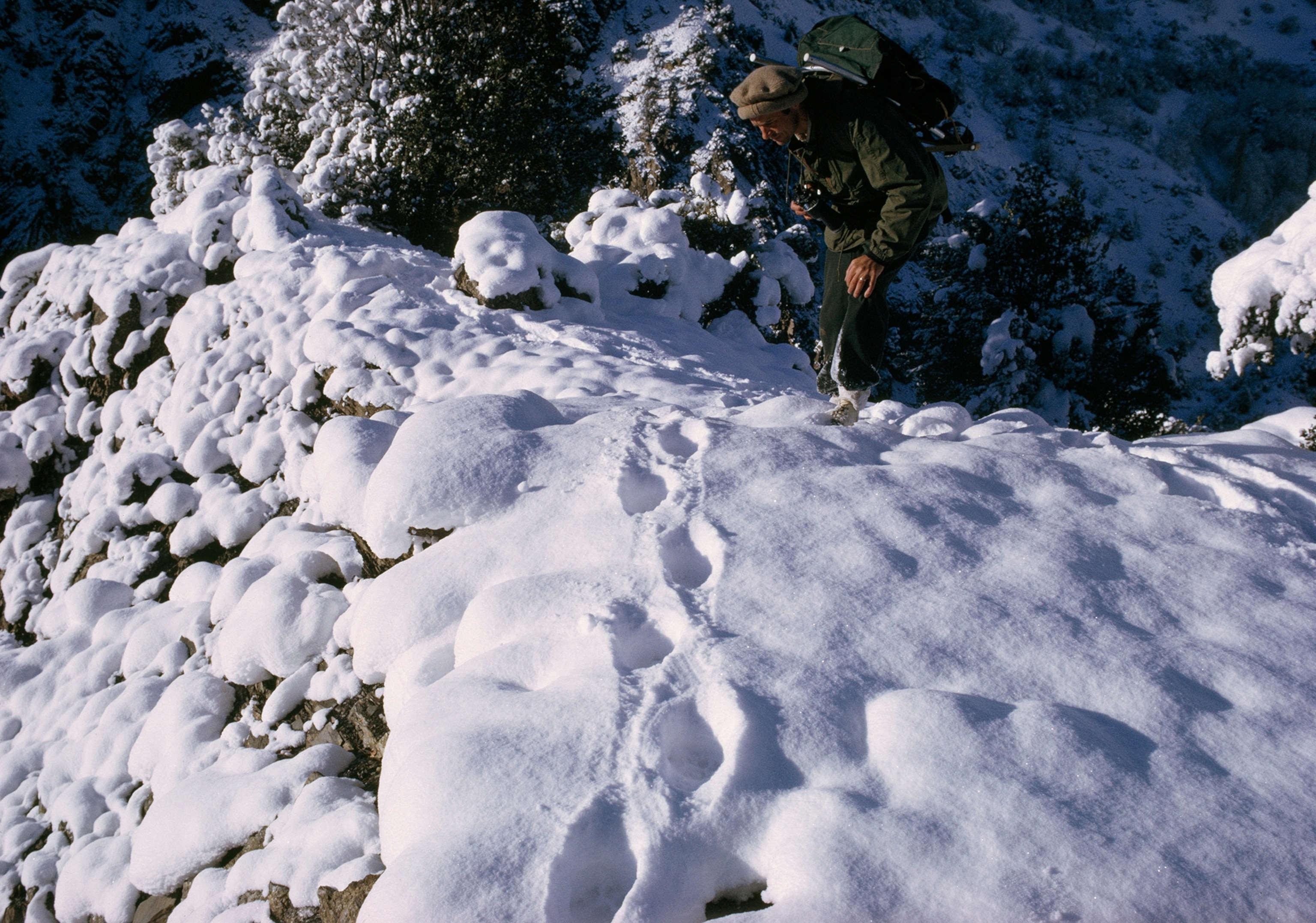
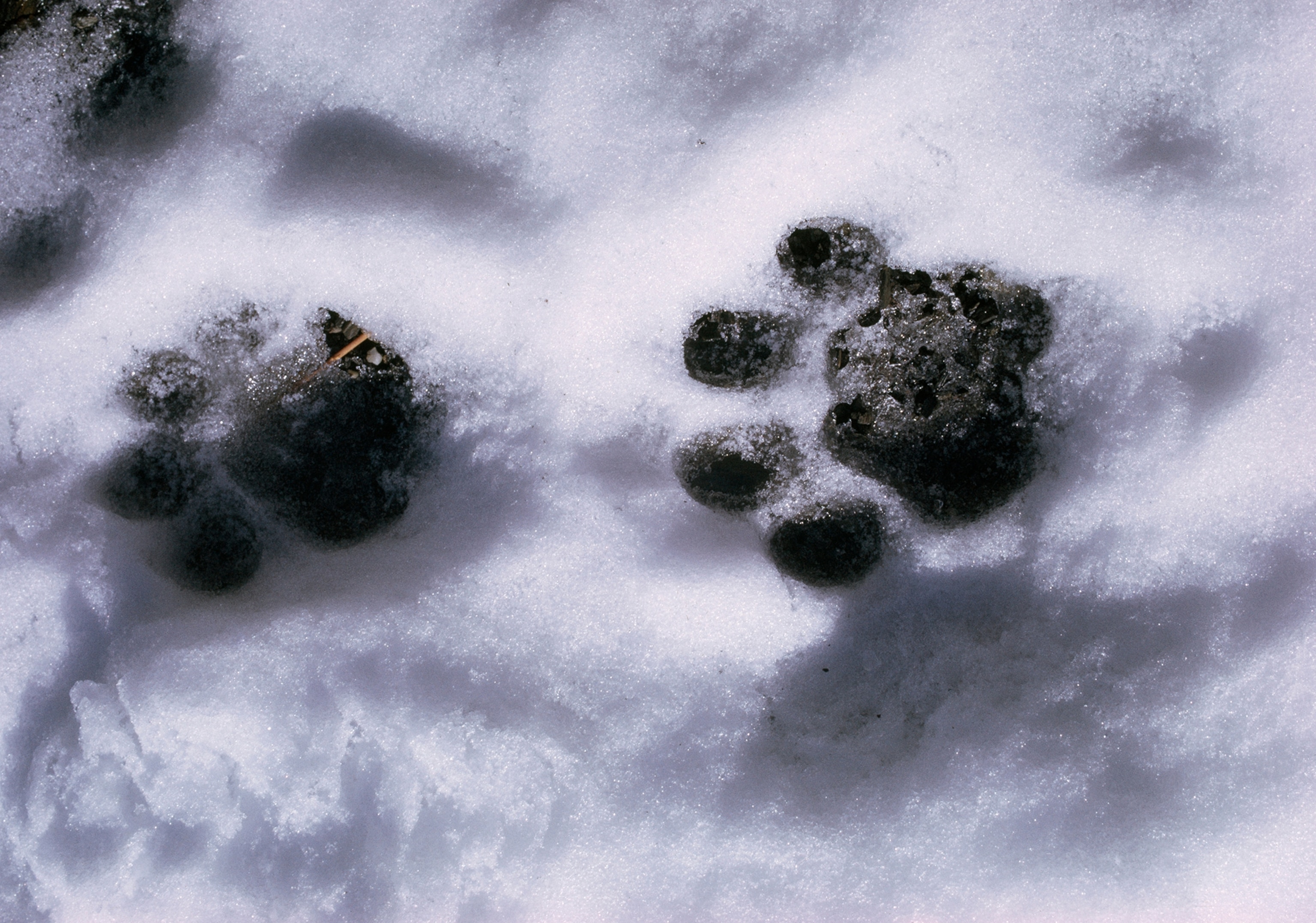
One day I saw leopard tracks in the snow at 11,000 feet. Determined to meet the elusive Pa nthera uncia, I began daily quests for fresh paw prints and "calling cards"—urine-splashed rocks or patches of gouged earth.
George G. Schaller, Nat Geo Image Collection
To entice the leopards I used live goats, but for two weeks the cats spurned my offerings. Then one morning the wheeling of vultures overhead told me a goat had been killed. Near the carcass I spied a female leopard on the crest of a spur. She stayed around for a week, consuming that goat and several more—and giving me the opportunity to make these unique photographs.
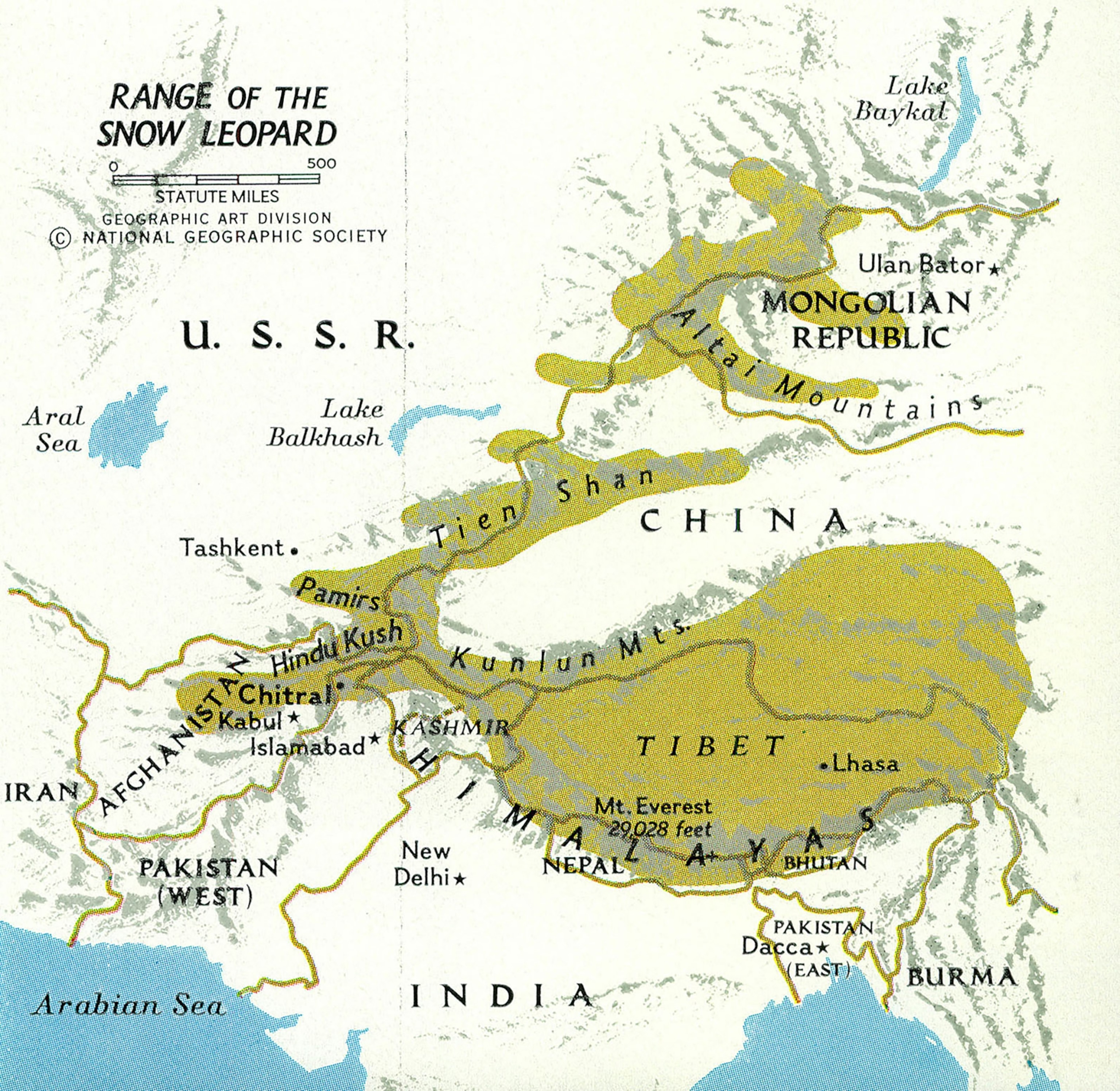
Stalking the heights, I found tracks of both the hind feet and the larger forepaws of the 80-pound cat. Chiefly nocturnal and solitary, snow leopards roam crags up to 18,000 feet in the Hindu Kush, the Himalayas, and other central Asian ranges.
The fluffy tail of this female,almost the length of her yard-long body, seemed to assume a life of its own when she moved. But her eyes were her most extraordinary feature. Pale, with a frosty glitter softened only by a tinge of amber,they were the eyes of a creature used to immense solitudes and snowy wastes.
A luxurious smoky-gray coat, sprinkled with black, both protects and imperils the snow leopard. It permits her to fade into rocky backgrounds, but its magnificence arouses man's greed. The International Fur Trade Federation recently recommended that its members halt all trade in snow-leopard pelts, but tourists in Pakistan and India often defy export bans and buy illegal skins for as much as $150 apiece.
Conservationists consider the species threatened, and much study is needed if it is to be saved. No one knows how many snow leopards exist; zoos house fewer than 100. My survey in Chitral, supported by grants from the New York Zoological Society and the National Geographic Society, provided a few facts, but many questions remain. With the realm of the snow leopard shrinking, its future looks bleak unless large sanctuaries can be created to safeguard this lovely cat.
Related Topics
You May Also Like
ENVIRONMENT ## Searching the Seabed for Florida’s Ice Age Societies

TRAVEL ## The Iconic Waldorf Astoria Is Back—Here’s Why You Should Dine There

HEALTH ## Could Cannabis Be Fueling the Rise in Strokes in Young Adults?
PAID CONTENT ## Experience the Best of Mexico’s Playa del Carmen
ANIMALS ## Stopping the Next Great Honeybee Killer—Before It Reaches the U.S.
The best of National Geographic delivered to your inbox
Email Address
Yes! I would like to receive top content, special offers, and other updates from National Geographic and The Walt Disney Family of Companies. By creating an account, you agree to our Terms of Use and acknowledge that you have read our Privacy Policy and US State Privacy Rights Notice.
Follow us National Geographic Instagram National Geographic Facebook National Geographic Twitter National Geographic Youtube National Geographic Linkedin National Geographic Tiktok National Geographic Reddit
United States (Change)
Endless exploration for as low as $1/month
This story is exclusively for Nat Geo subscribers. Subscribe now and get a FREE LIMITED-EDITION TOTE. Cancel anytime.
Already a Subscriber?

Notice of Right to Opt Out of Sale/Sharing
Some US states provide residents (or their authorized agents) with the right to opt out of “targeted advertising,” “selling,” or “sharing” of personal information, as defined by applicable laws. You can move the toggle to the left and click “Submit” to opt out of such activities occurring through this digital property. If you are logged in, we may be able to associate your choice with your account and apply it to data sharing occurring through this digital property (across your browsers and devices) as well as other digital properties of The Walt Disney Family of Companies. You can confirm the status of your choice or opt out or in by clicking “Do Not Sell or Share My Personal Information” or “Your Privacy Choices” on each property.
Manage Consent Preferences
Selling, Sharing, Targeted Advertising
[x] Selling, Sharing, Targeted Advertising
If you are not logged in, your opt-out will be specific to this property and device or browser. For our other digital properties, to opt out, select “Do Not Sell or Share My Personal Information” or “Your Privacy Choices” on each. If you clear your tracking history or use another browser or device, you’ll need to opt out again.
You can also submit this opt-out form, which may enable us to apply your opt-out more broadly, for example, to stop data sharing in connection with advertising intended to reach you on platforms not operated by Disney (e.g., social media platforms).
You may enable online, where available, a universal tool that automatically communicates your opt-out, such as Global Privacy Control (“GPC”), which we’ll process as if you had opted out through the toggle.
Even if you opt out, you may continue to see advertising, including ads that may be based on personal information processed before you opted out. Please visit Your US State Privacy Rights for more information about your rights and how to exercise them.
Cookie List
Clear
- [x] checkbox label label
Apply Cancel
Consent Leg.Interest
[x] checkbox label label
[x] checkbox label label
[x] checkbox label label
Submit