Why Capella Star Twinkles Different Colors
Topics—
Latest—

Newly Discovered Monkey Pops Up in Camera Trap Footage

Rare Water Mouse Rediscovered After Almost 100 Years

Striking Photos Reveal the Legacy of Yellowstone’s Wolves

The Hidden Ways Wolves Keep an Ecosystem Healthy
Nat Geo Recommends—
Meet the First New Cat Species Discovered in 100 Years
Topics—
Latest—

premium
A Famous Portrait of Anne Boleyn Hides a Strange Secret

premium
Will the Bayeux Tapestry Finally Give Up Its Secrets?
How Sleuths Decoded the Secret Letters of Mary, Queen of Scots

How Sleuths Decoded the Secret Letters of Mary, Queen of Scots

premium
This Military Mistake Nearly Cost Ancient Athens Everything
Nat Geo Recommends—

Inside the New Expedition to Find Amelia Earhart's Plane
Topics—
Latest—
Inside the Exclusive-Access Boom in Luxury Travel, From Islands to Palaces

Inside the Exclusive-Access Boom in Luxury Travel, From Islands to Palaces
Musician Kate Nash on Her Irish Heritage and the Reality of Touring

Musician Kate Nash on Her Irish Heritage and the Reality of Touring

7 Classic Food Experiences to Try in Marseille

Is This the Most Glamorous Event in the Alpine Calendar?
Nat Geo Recommends—
Where to Go for a Fall Leaf-Peeping Road Trip
Topics—
Latest—

premium
Could the Way You Chew Food Affect Your Dementia Risk?
Can a Controversial Diet Help Treat a Hidden Cause of Migraines?

premium
Can a Controversial Diet Help Treat a Hidden Cause of Migraines?

premium
The Case for Buying Kefir Over Yogurt
There's a Critical Window in Your 50s for Preserving Body Strength
premium
There's a Critical Window in Your 50s for Preserving Body Strength
Nat Geo Recommends—

Your Neighborhood Could Influence Your Dementia Risk
Science & Nature—
Latest—

Paid Content
From Farm to Future

Life Inside a Sinking City
Scientists Discover a Neuron That May Play a Role in Schizophrenia

premium
Scientists Discover a Neuron That May Play a Role in Schizophrenia

Microplastics Detected in Brazil’s Most Remote Wildlife
Featured—
Watch Nat Geo on Disney+



Watch the Sharkfest collection on Disney+

National Geographic Society—
More—


Look for This Colorful, Twinkling Star in the Night Sky This Fall
On autumn evenings, Capella can put on a dazzling display of red, green, and blue. Here's why it happens and where to look.
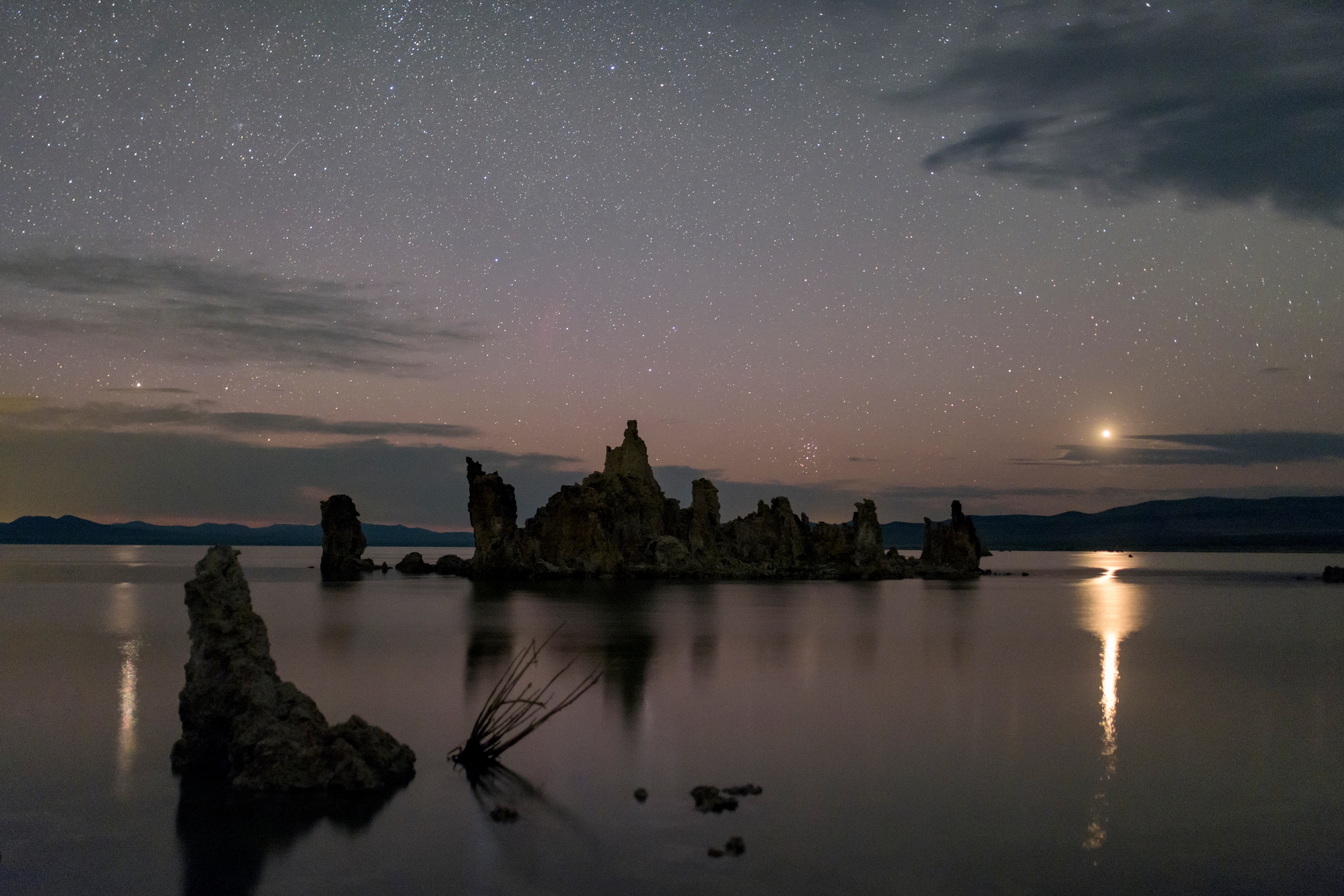
Venus, the Pleiades star cluster, and the bright star Capella rise in the dawn sky above a tufa formation in California’s Mono Lake.
BABAK TAFRESHI, National Geographic Image Collection
Look low in the northeastern sky on an autumn evening, and you might spot something unusual: a bright star flashing red, green, and blue. That’s Capella, one of the brightest stars in the night sky. But despite appearances, the star isn’t actually changing colors. The dazzling display is an optical effect caused by starlight passing through Earth’s atmosphere.
And Capella isn’t the only star that puts on this kind of show.
“Stars appear to twinkle or shimmer in the night sky, but this is not an inherent trait of stars,” says Emily Watson, astrophysicist and planetarium supervisor at the U.S. Space & Rocket Center. “As the light from a star passes through different densities and temperatures within our atmosphere, the light bends in a process called refraction.”
The color flashes happen because Earth’s atmosphere bends different wavelengths of light by different degrees. White starlight contains many colors, and atmospheric refraction can make those colors appear to separate and shimmer.
So why don’t planets twinkle like stars? “Because stars are so far away, they appear as point sources,” says Watson. “A planet, in comparison, is not a point source of light because it’s far closer to Earth. The larger size of planets also makes any distortion less apparent, so they do not appear to twinkle the same way stars do.”
Some stars, however, put on a more noticeable display than others. Capella is the sixth-brightest star in the night sky, making its colorful flashes particularly easy to spot. Though it appears to be a single star to the naked eye, Capella is actually a system of multiple stars, including two giant stars that orbit each other every 104 days.
But its brightness isn’t the only reason Capella stands out. On autumn evenings in the Northern Hemisphere, the star sits low in the early evening sky. Its light must pass through more atmosphere than the light from stars overhead, giving turbulent air more opportunity to distort it.
As autumn gives way to winter, Capella climbs higher in the night sky. With its light traveling through less atmosphere, its colorful scintillation transforms into a yellow-white light, closer to the starlight’s true color. It can still twinkle from up high, though, just not as much as it does near the horizon.
For the best chance of catching Capella’s colorful display, look toward the northeastern sky after dark on an autumn evening. The star is often one of the first bright points of light to catch your eye. “The Big Dipper can be used to find Capella,” says Watson. “First, locate the star where the handle meets the bowl, and draw a line from that star through the top outer star of the bowl. Continue on this line until you reach the next bright star, which will be Capella.”
Capella is also the brightest star in Auriga, the constellation known as the Charioteer. In winter, it marks one corner of the Winter Hexagon asterism, a large pattern of bright stars that spans much of the sky.
Stefanie Waldek is a New York-based journalist and editor who regularly covers night sky events for National Geographic.
Related Topics
You May Also Like
SCIENCE ## How to Spot the ‘Loneliest Star’ in the Autumn Night Sky
SCIENCE ## The 'Summer Triangle' Stars Can Help You Navigate the Night Sky
SCIENCE ## 8 Night Sky Events to See in October, From Fiery Meteors to a Vanishing Star Cluster
SCIENCE ## 9 Night Sky Events to See in September

SCIENCE ## 9 night sky events to see in June
The best of National Geographic delivered to your inbox
Email Address
Yes! I would like to receive top content, special offers, and other updates from National Geographic and The Walt Disney Family of Companies. By creating an account, you agree to our Terms of Use and acknowledge that you have read our Privacy Policy and US State Privacy Rights Notice.
Follow us National Geographic Instagram National Geographic Facebook National Geographic Twitter National Geographic Youtube National Geographic Linkedin National Geographic Tiktok National Geographic Reddit
United States (Change)

Notice of Right to Opt Out of Sale/Sharing
Some US states provide residents (or their authorized agents) with the right to opt out of “targeted advertising,” “selling,” or “sharing” of personal information, as defined by applicable laws. You can move the toggle to the left and click “Submit” to opt out of such activities occurring through this digital property. If you are logged in, we may be able to associate your choice with your account and apply it to data sharing occurring through this digital property (across your browsers and devices) as well as other digital properties of The Walt Disney Family of Companies. You can confirm the status of your choice or opt out or in by clicking “Do Not Sell or Share My Personal Information” or “Your Privacy Choices” on each property.
Manage Consent Preferences
Selling, Sharing, Targeted Advertising
[x] Selling, Sharing, Targeted Advertising
If you are not logged in, your opt-out will be specific to this property and device or browser. For our other digital properties, to opt out, select “Do Not Sell or Share My Personal Information” or “Your Privacy Choices” on each. If you clear your tracking history or use another browser or device, you’ll need to opt out again.
You can also submit this opt-out form, which may enable us to apply your opt-out more broadly, for example, to stop data sharing in connection with advertising intended to reach you on platforms not operated by Disney (e.g., social media platforms).
You may enable online, where available, a universal tool that automatically communicates your opt-out, such as Global Privacy Control (“GPC”), which we’ll process as if you had opted out through the toggle.
Even if you opt out, you may continue to see advertising, including ads that may be based on personal information processed before you opted out. Please visit Your US State Privacy Rights for more information about your rights and how to exercise them.
Cookie List
Clear
- [x] checkbox label label
Apply Cancel
Consent Leg.Interest
[x] checkbox label label
[x] checkbox label label
[x] checkbox label label
Submit
Enter your email to read this article
Plus, get unlimited access to free National Geographic content
Email Address
SUBMIT
Yes! I would like to receive top content, special offers, and other updates from National Geographic and The Walt Disney Family of Companies. By creating an account, you agree to our Terms of Use and acknowledge that you have read our Privacy Policy and US State Privacy Rights Notice.
Already have an account?