November 2026 Night Sky Events
Topics—
Latest—

Newly Discovered Monkey Pops Up in Camera Trap Footage

Rare Water Mouse Rediscovered After Almost 100 Years

Striking Photos Reveal the Legacy of Yellowstone’s Wolves

The Hidden Ways Wolves Keep an Ecosystem Healthy
Nat Geo Recommends—

Meet the First New Cat Species Discovered in 100 Years
Topics—
Latest—

Michelangelo and the Tomb that Tormented Him

premium
A Famous Portrait of Anne Boleyn Hides a Strange Secret

premium
Will the Bayeux Tapestry Finally Give Up Its Secrets?
How Sleuths Decoded the Secret Letters of Mary, Queen of Scots

How Sleuths Decoded the Secret Letters of Mary, Queen of Scots
Nat Geo Recommends—

Inside the New Expedition to Find Amelia Earhart's Plane
Topics—
Latest—

England’s Forgotten Castle Trail—And the Woman Behind It

15 Spectacular Journeys by Land, Sea and Sky
Inside the Exclusive-Access Boom in Luxury Travel, From Islands to Palaces

Inside the Exclusive-Access Boom in Luxury Travel, From Islands to Palaces
Musician Kate Nash on Her Irish Heritage and the Reality of Touring

Musician Kate Nash on Her Irish Heritage and the Reality of Touring
Nat Geo Recommends—

Where to Go for a Fall Leaf-Peeping Road Trip
Topics—
Latest—

premium
Rethinking How to Fight the World’s Deadliest Infection

premium
Could the Way You Chew Food Affect Your Dementia Risk?
Can a Controversial Diet Help Treat a Hidden Cause of Migraines?

premium
Can a Controversial Diet Help Treat a Hidden Cause of Migraines?

premium
The Case for Buying Kefir Over Yogurt
Nat Geo Recommends—

Your Neighborhood Could Influence Your Dementia Risk
Science & Nature—
Latest—

Paid Content
From Farm to Future

Life Inside a Sinking City
Scientists Discover a Neuron That May Play a Role in Schizophrenia

premium
Scientists Discover a Neuron That May Play a Role in Schizophrenia

Microplastics Detected in Brazil’s Most Remote Wildlife
Featured—
Watch Nat Geo on Disney+



Watch the Sharkfest collection on Disney+

National Geographic Society—
More—


8 Night Sky Events to See in November, From a Supermoon to 3 Meteor Showers
Three meteor showers will light up November’s skies, while five planets make appearances throughout the month. Plus, the first supermoon of the year arrives just before Thanksgiving.
.jpg))
An owl perches atop a cactus in Tucson, Arizona, beneath a moonless night sky. November’s new moon offers ideal conditions for stargazing, with darker skies making distant stars, galaxies, and nebulae easier to spot.
Sean Parker
Not one, but three meteor showers could bring streaking fireballs to November’s night skies. If that’s not enough to whet your appetite, here’s another: The month will bring the first of three consecutive supermoons—a phenomenon skywatchers haven’t seen since January.
Northern lights season remains in full swing. While the sun’s peak period of activity, solar maximum, is behind us, we’re still seeing impressive autumn displays—including a mid-latitude show in early October. There’s likely more where that came from as winter’s long dark hours begin, especially in far-north locales like Iceland and Norway.
Here’s everything to watch for in November’s night sky, including tips on when and where to watch.
Moon, Mars, Jupiter alignment—November 2-3
Around midnight on November 2 and 3, the moon, Mars, and Jupiter will appear in a tight line above the eastern horizon. The trio will travel higher through the sky until sunrise, with the planets and moon within roughly six degrees—or about a binocular field—of each other on November 2. Regulus, the brightest star in the Leo constellation, will be visible just below them.
Trace the line of the sky dots up to find the Beehive Cluster, an open star cluster in the Cancer constellation. Under dark skies, it looks like a smudge to the naked eye, but a telescope or binoculars will get you closer to its collection of roughly 1,000 stars. Use a stargazing app to help you navigate the night sky.
Taurid meteor shower peaks—November 4-5, 11-12
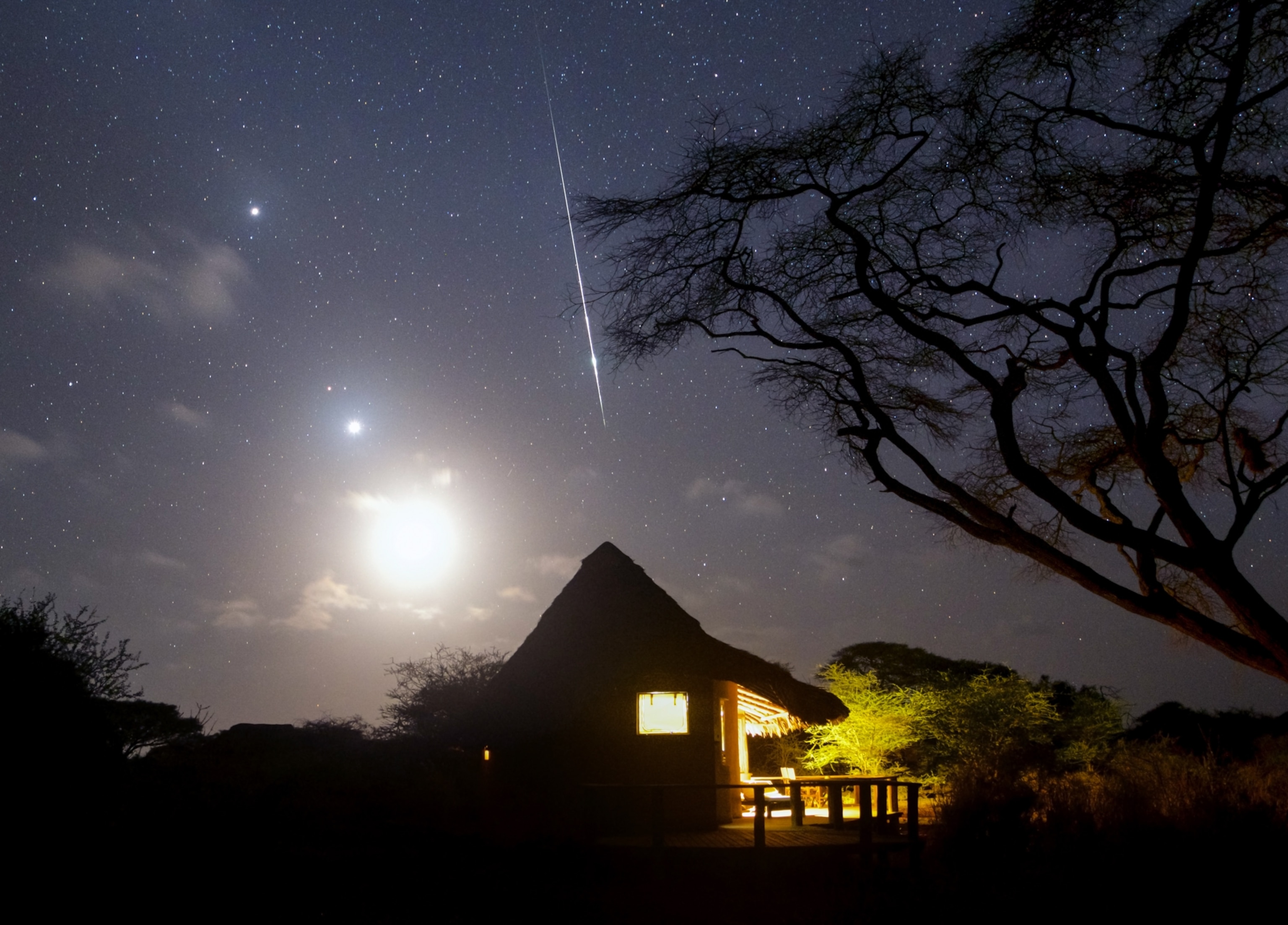
A fireball from the Taurid meteor shower streaks above an acacia tree at a camp near Amboseli National Park in Kenya. The shower peaks twice in November and is known for producing bright, slow-moving meteors that can light up dark skies.
BABAK TAFRESHI, National Geographic Image Collection
November begins with two companion meteor shower streams: the Southern and Northern Taurids. Both events are mild, producing about five meteors per hour. But this year, they coincide with a dim moon, which will reduce the amount of light. With dark skies, you could see impressive streaks during each event; keep an eye out for the vivid fireballs these showers are known for.
The Southern Taurids peak overnight from November 4 to 5, while the Northern Taurids reach their crescendo from November 11 to 12. Both are best enjoyed after midnight, when the Taurus constellation—the radiant for both showers—is highest in the sky. They’re both visible from the northern and southern hemispheres.
New moon—November 9
This month, deep-sky objects like the Orion Nebula and Andromeda Galaxy are easy targets, and they’re best viewed under dark skies without lunar light. For that, bookmark the new moon night on November 9. This evening and the nights around it are perfect for spotting galaxies and nebulae, especially if you have access to a telescope. Some observatories also stay open late for public stargazing.
Planet parade—mid-November
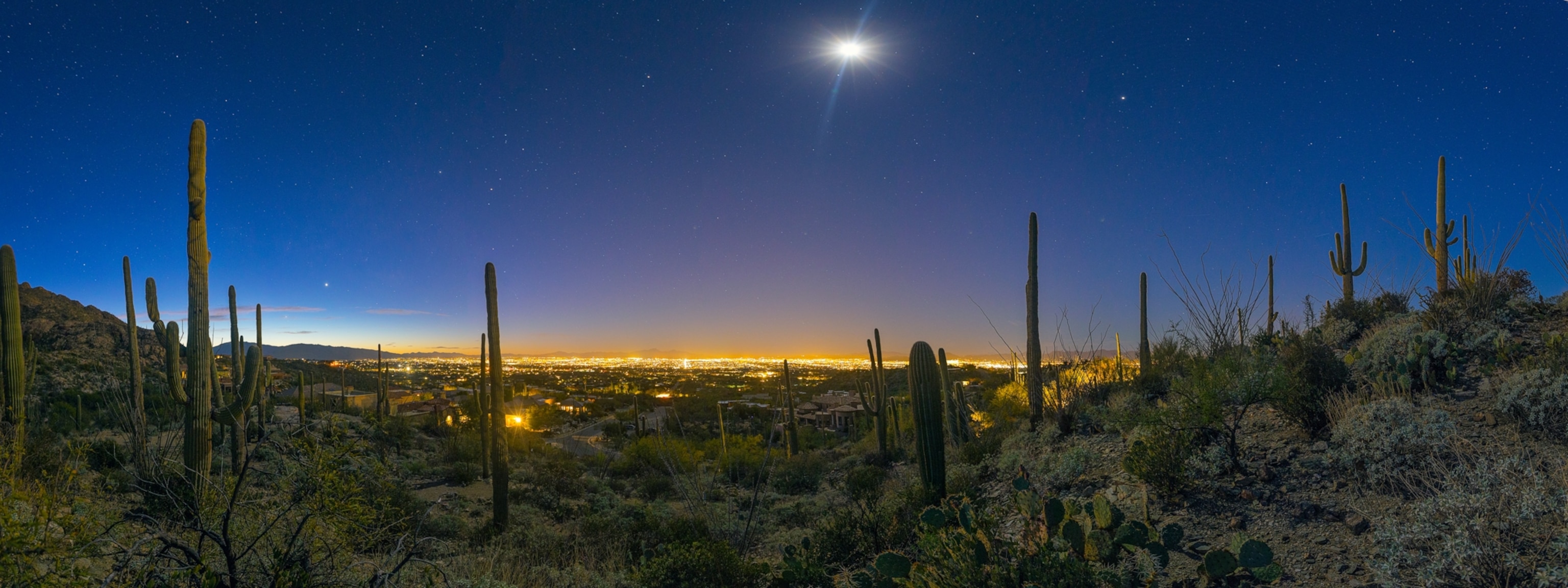
A parade of planets stretches across the night sky. In mid-November, skywatchers can spot Mars, Jupiter, Mercury, and Venus before sunrise, while distant Uranus may be visible with binoculars or a telescope.
Sean Parker
Watch a predawn planet parade from around November 14 to 16, when Mars and Jupiter will appear in the southern sky as close as roughly one degree, or one pinky width, of each other. Above the southeast horizon, Mercury and Venus will also rise before the sun. Uranus is out this month as well, although you’ll likely need strong binoculars or a telescope to see it as it travels from east to west throughout the night. Best viewing is mid-month, but keep watching on November 30, when Regulus and the moon join Mars and Jupiter throughout the night.
You May Also Like
SCIENCE ## 8 Night Sky Events to See in October, From Fiery Meteors to a Vanishing Star Cluster

SCIENCE ## 8 night sky events to see in May
SCIENCE ## 10 night sky events to see in November
Leonid meteor shower peaks—November 17-18
The Leonid meteor shower runs through November, peaking overnight from November 17 to 18. The spectacle is known for its speedy, luminous sky streaks, which often erupt in color as they hit Earth’s atmosphere. The Leonids are pretty mild—expect around a dozen or fewer meteors per hour under dark skies. The best viewing hits after midnight. Watch from an open viewing area, such as a large field or observation deck. While the meteors appear to originate from the radiant constellation Leo, they can shoot in any direction.
Mercury reaches greatest western elongation—November 20
Mercury will be especially visible late this month as it reaches its greatest western elongation on November 20. Typically, the planet travels close to the sun, where it’s tough to spot. During elongation, it’s farthest from our bright star. Viewing on the mornings just before, during, and after November 20 will be exceptional. Look for Mercury above the southeast horizon before sunrise. It’s near bright Venus, located just above it. Remember to lower any optical aids before the sun actually rises.
Supermoon—November 24

A supermoon rises behind a bristlecone pine. November’s full beaver moon will be the first supermoon since January, appearing bigger and brighter than usual as it nears its closest point to Earth.
Sean Parker
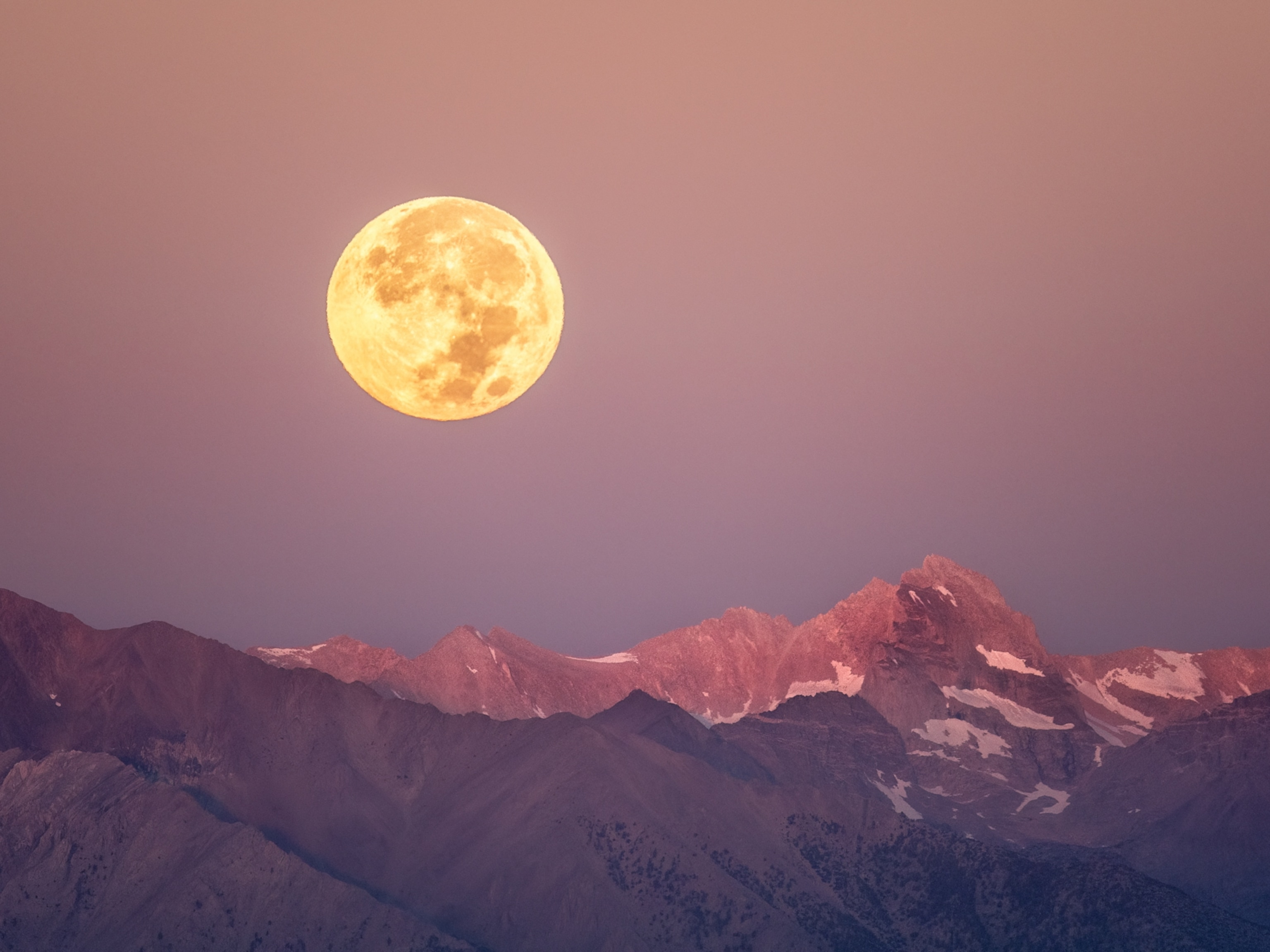
The first supermoon since January 2026 will decorate the night sky on November 24. It’s the full beaver supermoon, a phenomenon that occurs when the moon’s orbit swings closer to Earth than usual. It appears up to 30 percent brighter and 14 percent larger than the moon at its farthest point from Earth, known as apogee.
The best time to watch a supermoon is at moonrise or moonset, which occurs at sunset or sunrise, respectively. This is due to an optical trick known as the moon illusion, which makes it appear larger than normal at the horizon. During golden hour, the oversized orb also picks up an eerie orange glow.
Uranus at opposition—November 25-26
Uranus, the seventh planet from the sun, can be tough to spot given its roughly 1.7-billion-mile distance from us. The view will slightly improve on November 25 as the planet reaches opposition—that’s when it’s opposite the sun and most visible. It’s easiest to admire the ice giant with telescopes or a good pair of binoculars. Look near the Pleiades star cluster.
Stephanie Vermillionis a Cleveland-based journalist, photographer, and author who covers adventure, conservation, and the night sky for National Geographic and other publications. She is the author of 100 Nights of a Lifetime: The World’s Ultimate Adventures After Dark.
Related Topics
You May Also Like

SCIENCE ## 9 Night Sky Events to See in August
SCIENCE ## 9 Night Sky Events to See in September

SCIENCE ## July’s double meteor shower could produce brilliant fireballs

SCIENCE ## 8 night sky events to see in July

SCIENCE ## 9 night sky events to see in June
The best of National Geographic delivered to your inbox
Email Address
Yes! I would like to receive top content, special offers, and other updates from National Geographic and The Walt Disney Family of Companies. By creating an account, you agree to our Terms of Use and acknowledge that you have read our Privacy Policy and US State Privacy Rights Notice.
Follow us National Geographic Instagram National Geographic Facebook National Geographic Twitter National Geographic Youtube National Geographic Linkedin National Geographic Tiktok National Geographic Reddit
United States (Change)
Enter your email to read this article
Plus, get unlimited access to free National Geographic content
Email Address
SUBMIT
Yes! I would like to receive top content, special offers, and other updates from National Geographic and The Walt Disney Family of Companies. By creating an account, you agree to our Terms of Use and acknowledge that you have read our Privacy Policy and US State Privacy Rights Notice.
Already have an account?

Notice of Right to Opt Out of Sale/Sharing
Some US states provide residents (or their authorized agents) with the right to opt out of “targeted advertising,” “selling,” or “sharing” of personal information, as defined by applicable laws. You can move the toggle to the left and click “Submit” to opt out of such activities occurring through this digital property. If you are logged in, we may be able to associate your choice with your account and apply it to data sharing occurring through this digital property (across your browsers and devices) as well as other digital properties of The Walt Disney Family of Companies. You can confirm the status of your choice or opt out or in by clicking “Do Not Sell or Share My Personal Information” or “Your Privacy Choices” on each property.
Manage Consent Preferences
Selling, Sharing, Targeted Advertising
[x] Selling, Sharing, Targeted Advertising
If you are not logged in, your opt-out will be specific to this property and device or browser. For our other digital properties, to opt out, select “Do Not Sell or Share My Personal Information” or “Your Privacy Choices” on each. If you clear your tracking history or use another browser or device, you’ll need to opt out again.
You can also submit this opt-out form, which may enable us to apply your opt-out more broadly, for example, to stop data sharing in connection with advertising intended to reach you on platforms not operated by Disney (e.g., social media platforms).
You may enable online, where available, a universal tool that automatically communicates your opt-out, such as Global Privacy Control (“GPC”), which we’ll process as if you had opted out through the toggle.
Even if you opt out, you may continue to see advertising, including ads that may be based on personal information processed before you opted out. Please visit Your US State Privacy Rights for more information about your rights and how to exercise them.
Cookie List
Clear
- [x] checkbox label label
Apply Cancel
Consent Leg.Interest
[x] checkbox label label
[x] checkbox label label
[x] checkbox label label
Submit