The Best Telescopes for Beginners
We independently review everything we recommend. When you buy through our links, we may earn a commission. Learn more›
The Best Telescopes for Beginners


Few things are as awe-inspiring as being under a clear night sky, looking up, and gazing at a seemingly infinite array of stars overhead. So we rounded up 17 telescopes, and after years of star parties, we think the Celestron NexStar 5SE is the best telescope for a curious amateur.
It gathers enough light for you to view the best features of the solar system, and it provides enough power for you to begin exploring deep-sky objects. In addition, this model has an electronic GPS database preloaded with almost 40,000 celestial objects, so after you calibrate the scope, it can scan the skies for you.
Everything we recommend

Top pick

Best for...

Best for...
Celestron StarSense Explorer LT 80AZ Refractor Telescope
Best for...
Top pick
Top pick, The best beginner telescope Celestron NexStar 5SE Computerized Telescope
This electronic telescope can find objects in the night sky automatically, saving you the effort of reading star charts and manuals.
The Celestron NexStar 5SE Computerized Telescope, our top pick for the best amateur telescope, is a Schmidt-Cassegrain scope, which means it uses both lenses and mirrors in a relatively compact package. This telescope has a primary 5-inch mirror — big enough for a light-gathering capacity that yields crisp images of some of the best objects in the solar system, from Saturn’s rings to Jupiter’s cloud bands. And it provides sufficient power to introduce you to objects in the deep sky.
The NexStar 5SE operates on a fully computerized system and gives you a handheld controller to guide it. Instead of fumbling to read star charts and align the telescope manually, with the press of a button you can align and focus your telescope on a myriad of celestial objects.
Unlike with some of the NexStar 5SE’s competitors, this model’s controller worked flawlessly in our tests, offering micro adjustments and responsive tracking with the attached controller system. Weighing 15 pounds, this scope is very portable relative to other options out there, so you should have no problem packing it into a trunk and setting it up on location.
Best for...
Best for..., Best for sharp views farther into space Sky-Watcher Classic Dobsonian Telescope (8-inch)
Though a bit unwieldy at times, this model can view dimmer objects in the deeper reaches of space.
The traditional Dobsonian telescope (a type of instrument sometimes referred to as a “light bucket”) is all about light gathering, and the images we saw through the lens of the Sky-Watcher Classic Dobsonian Telescope were awe-inspiring.
The 8-inch mirror, which captures the light, is significantly larger than that of our top pick. That means you get crisper, clearer images and can see fainter objects that are farther away.
The trade-off is that this scope is huge: Loading it into a car or even moving it around a yard is a chore, so it’s best suited for folks who have a dedicated space for it at home.
Best for...
Best for..., Best for learning about and viewing near-Earth objects Celestron StarSense Explorer LT 80AZ Refractor Telescope
Celestron StarSense Explorer LT 80AZ Refractor Telescope
This inexpensive telescope integrates smartphone app connectivity in a clever way, opening up the skies for beginners. It’s best for viewing celestial objects located closer to Earth.
The Celestron StarSense Explorer LT 80AZ Refractor Telescope comes with a dead-simple smartphone app that highlights the evening’s most interesting viewing opportunities and shows you how to find them in the sky.
This scope is lightweight and portable, with an easy-to-position alt-azimuth mount. However, it’s a refractor-style telescope with a smaller, 3.15-inch aperture, so it’s best suited to viewing celestial objects located closer to Earth.
Best for...
Best for..., Best for astrophotography ZWO Astro Seestar S50 All-in-One Smart Telescope
This easy-to-carry-and-set-up telescope can capture good-looking photos of deep-sky objects such as nebulae and galaxies.
May be out of stock
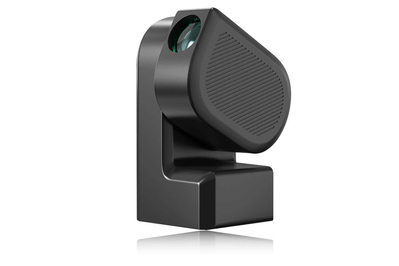
The ZWO Astro Seestar S50 All-in-One Smart Telescope is a compact, all-in-one telescope and photo rig with an integrated automatic mount (like our top pick). Priced around $550 at this writing, it’s perhaps the cheapest and simplest option if you want to get photos from a telescope.
It’s easy to carry with you, since it weighs just over 7.5 pounds packed in its travel case with its included tripod, and it sets up in minutes. It doesn’t provide a great view of midrange celestial objects such as the solar system’s planets and their moons, since its relatively short focal length makes them appear blurry, but it excels at imaging deep-sky objects, thanks to its automatic photo-stacking feature.
The research
Why you should trust us
Writer Colin Rosemont grew up around telescopes and has had a longtime interest in astronomy, but he still considers himself a beginner. His relative lack of expertise allowed him to get a fresh perspective on each telescope model he tested. He was able to flail and make mistakes when setup instructions were not clear, and he learned to operate each telescope as if he were a complete novice — exactly the group we wanted to write this guide for.
Editor Signe Brewster is also a novice telescope user (though during her tenure as a physics writer, she spent a lot of time thinking about space at the particle level). She has spent the past decade writing about emerging technology, including drones, 3D printers, and virtual reality. And in that time she has developed an eye for what makes gadgets especially accessible or off-putting to beginners.
James Austin is a writer who has been covering games and hobbies since 2022. Growing up an hour away from Kennedy Space Center with two grandparents working for NASA, he has been fascinated and excited by space since he was born. After using all of our picks periodically to view the dark skies of Colorado, he now has a handle on the basics of amateur stargazing, and he used that experience to look into the new subcategory of smart telescopes with integrated imaging technology.
For this guide:
Who this is for
The telescopes we recommend in this guide are ideal for beginning astronomers, as they’re designed to help you become familiar with the night sky. Using one of these scopes, you can start by looking at the moon, move on to the planets of the solar system, and then venture on to the “deep sky” to examine star clusters, nebulae, and galaxies.
We wanted to find scopes with the appropriate range to help a new astronomer get started and then keep them learning. So we looked for options that are especially easy to set up and use, as well as those equipped with high-quality mirrors and lenses that won’t limit how far more-experienced stargazers can see.
To find their first planetary objects, some people might like the additional hand-holding of a computerized or app-compatible telescope, while others might like the challenge of finding stars the analog way. We’ve included options for both approaches.
We limited our testing pool to telescopes that were $2,000 or less at the time of this guide’s most recent update. Once you start spending more, telescopes become more specialized. And if you’re at that stage of your astronomy journey, you likely already know which specific features you’d like to spend that extra cash on.
Telescopes are typically large and heavy devices, so we’ve noted the physical abilities necessary to use each of them. Some come with an adjustable tripod, while others must sit on a tabletop. Some need only a gentle push for positioning, while others require fine-tuning with a knob or buttons pressed on a controller.
Telescopes also range significantly in weight and portability. Generally, you need to bend over to look through a telescope’s lens. If you’re planning a star-viewing party with accessibility in mind, you might find this Astronomers Without Borders guide helpful.
How we picked and tested

There’s no single telescope that is right for everybody, so rather than setting rigid requirements for specific types of telescopes and key features, we looked for options with a mix of characteristics with regard to aperture, magnification, lens and finder design, and type of mount.

Over the course of seven years, we’ve tested telescopes in several locations across the United States. These included Portland, Oregon; the high desert outside Smith Rock State Park in central Oregon; St. Paul, Minnesota; Denver, Colorado; and rural Indiana.
To test each model, we first timed how long we took to set it up and have it ready for stargazing. Nobody wants to be discouraged by the technology before they even have the chance to position it outside, so ease of setup was a big factor in our assessment.
We also tested the stability and user-friendliness of each telescope’s mount. Slight bumps to the eyepiece readily showed which mounts were sturdy and which ones could not handle even the slightest shake without losing the image in the frame. Additionally, we took portability into account, considering size, weight, and packability for the average recreational observer.
We ranked the relative clarity of the image and the brightness level from our test models. And to measure each telescope’s ease of use, we operated each telescope, moving it back and forth between Jupiter and the moon (two objects in the night sky that are relatively easy to locate).
We tested three different computerized mounts, allowing for a side-by-side comparison of their functionality. A recurring word of advice from our interviewed experts: Figure out how to work your computerized system before you get out under the night sky! Using the technology can definitely involve a learning curve, so it is a good idea to dial it in while you’re in the comfort of your own backyard, before you go farther afield.
To test the telescopes’ optical quality, we followed the advice of Greg Jones, president of Eclipse Technologies and resident optics expert of the Rose City Astronomers club of Portland, Oregon, in performing a Ronchi eyepiece test. Using a 35mm film canister and the Ronchi screen that Jones sent us, we improvised a Ronchi eyepiece. After replacing the normal eyepiece with the Ronchi eyepiece fitted with the screen, we focused the telescopes on a bright star to see whether we observed a pattern of parallel lines on the object.
As expected, we observed lines that appeared relatively straight and parallel to the edge, rather than the warped lines that would indicate some type of aberration or distortion in the main optical unit. The majority of commercial telescopes nowadays are manufactured in China or Taiwan; the standardized manufacturing and testing methods the companies use ensure more-consistent optical quality than in the past, as well as increasingly affordable prices.
Top pick: Celestron NexStar 5SE Computerized Telescope

Top pick
Top pick, The best beginner telescope Celestron NexStar 5SE Computerized Telescope
This electronic telescope can find objects in the night sky automatically, saving you the effort of reading star charts and manuals.
The Celestron NexStar 5SE Computerized Telescope, a Schmidt-Cassegrain model, is our top pick due to its superior ease of use and solid image quality. Its primary 5-inch mirror offers crisp, intimate views of the moon and bright planets, and it provides an entry into views of distant galaxies and star clusters.
It’s fully computerized. The NexStar 5SE comes with a handheld controller to guide the telescope across the sky. Compared with our experience using some competing models, we found that this controller worked seamlessly, offering micro adjustments and responsive tracking with the attached controller system.
It provides the best balance between functionality and size. We chose the NexStar 5SE as the best telescope for most beginners because of its size, functionality, and cost. The telescope and the included tripod together weigh about 27 pounds and easily disassemble into several portable pieces.
Since we were looking for portability, we set aside the larger models in the same product line, and we dismissed the smaller NexStar 4SE due to its more-limited capacity to offer views of deep-sky objects.
If size is not an issue for you, we recommend upgrading to the NexStar 6SE, since an extra inch of aperture opens up more light-gathering potential and thus more viewing opportunities.
The NexStar 5SE comes with a 25mm eyepiece, a great first option before you expand into more-specialized eyepieces.
The computerized mount makes finding stars easy. This can help speed up the learning process and assist novices in navigating the endless sea of stars without their having to commit years to accumulating that kind of knowledge. (If you want to learn the old-fashioned way, a great resource for the whole family is The Stars: A New Way to See Them, an astronomy how-to written by H.A. Rey, the creator of Curious George.)
Note that you can control this telescope only with its controller, so you should be comfortable pressing buttons and reading a small screen instead of pushing the optical tube into position.
It comes with a database of targets to look at. When you enter information such as the date, the time, and the nearest city to your observing site, the NexStar 5SE offers a database of nearly 40,000 nighttime objects.
This database allows you to identify objects you see through the scope, as well as to instruct the telescope to find new objects. The Tour feature offers a list of the best objects to view specific to your time and location, anywhere in the world.
It’s easy to set up and use. Along with an extensive owner manual, the NexStar 5SE comes with an expedited and abridged setup manual, replete with instructional photos intended to get you using your telescope as fast as possible.
Using these friendly instructions, we had the telescope mounted and set up in under 15 minutes (you need to tighten some screws, but most pieces snap together), and we were already playing with the SkyAlign telescope-alignment features. The telescope comes with an adjustable tripod, which makes it easy to use whether you’re sitting down or standing up.
The included accessories are excellent. The NexStar 5SE includes a 25mm eyepiece, which serves as the best starter eyepiece to expand upon later. It also comes with an ultra-sturdy steel tripod, and you can attach the optical tube without having to use tools. The NexStar 5SE’s tripod (but not that of the 6SE or the 8SE) also includes a wedge for adjusting the mount and allowing for some tinkering in longer-exposure astrophotography.
Flaws but not dealbreakers
It runs on eight AA batteries, and they drain fast. The batteries power the mount, and when it’s in use they offer an average of only two to four hours of power. Other power sources are available, however, including this AC adapter from Celestron.
You can also draw power from your car battery and a portable 12 V DC power supply. Celestron sells an accessory called a Power Tank for use in the field, but we haven’t tested it ourselves. If you’d like a rechargeable option, check out our favorite portable power stations.
The best views for a reasonable cost: Sky-Watcher Classic Dobsonian Telescope (8-inch)

!The best telescope for home use, the Sky-Watcher Classic Dobsonian Telescope (8-inch), standing outside.
Best for...
Best for..., Best for sharp views farther into space Sky-Watcher Classic Dobsonian Telescope (8-inch)
Though a bit unwieldy at times, this model can view dimmer objects in the deeper reaches of space.
The Sky-Watcher Classic Dobsonian Telescope (8-inch) is the type of telescope experts most often suggest for beginners looking to get the most bang for their buck. Also referred to as “light buckets,” Dobsonian models offer exceptional image quality and light-gathering capability for the price.
The Sky-Watcher Classic has a larger mirror than our other picks, so it can gaze deeper into the night sky and get clearer images with the same amount of light, but its large size makes it harder to bring to remote stargazing locations.
It’s big and heavy, but sharp. The Sky-Watcher Classic weighs about 60 pounds (including the scope and base) and ships in two boxes, one housing the tubular scope and the other containing the unassembled swiveling base.
We had this telescope fully assembled and ready to go in under an hour, which was quite fast in comparison with the process for some other Dobsonian telescopes but more than twice as long as it took us to set up most of the telescopes we tested.
This telescope’s much bulkier design gives it a lot more space for mirrors and lenses, though. Thanks to this Sky-Watcher model’s much larger mirror and wider aperture, you can get more-detailed views of near-Earth objects and crisper looks at deep-sky subjects such as nebulae and distant star systems.
It’s more useful in backyards than in the backwoods. For our tests, we were able to transport two 8-inch Dobsonian telescopes in the back of a Subaru hatchback. But don’t expect to just throw this telescope in your trunk and head out with a bunch of friends to do some stargazing. This telescope works best for backyard or “sidewalk” viewing, for which minimal transportation is required.

Flaws but not dealbreakers
It lacks computer-assisted positioning. The Sky-Watcher Classic Dobsonian Telescope does not come with any computerized components to assist in locating and tracking stars in the sky. For a beginner, the absence of such a system can be either a blessing or a curse.
Greg Jones, president of Eclipse Technologies and member of the Rose City Astronomers club in Portland, Oregon, told us, “People will generally use [manual] telescopes a lot more than computerized models. Every star-viewing event, people show up with their computerized mounts, wondering how to use them and needing help.”
The superb optics of this model from Sky-Watcher work best for people who want a taste of a high-powered scope but don’t need or want the hassle of a computerized mount.
An app-enabled option: Celestron StarSense Explorer LT 80AZ Refractor Telescope

!The app-enabled telescope, the An app-enabled option: Celestron StarSense Explorer LT 80AZ, shown outside.
Best for...
Best for..., Best for learning about and viewing near-Earth objects Celestron StarSense Explorer LT 80AZ Refractor Telescope
Celestron StarSense Explorer LT 80AZ Refractor Telescope
This inexpensive telescope integrates smartphone app connectivity in a clever way, opening up the skies for beginners. It’s best for viewing celestial objects located closer to Earth.
If the stars are unexplored territory for you, the Celestron StarSense Explorer LT 80AZ Refractor Telescope is the fastest, cheapest, and most helpful traditional telescope we’ve found for bringing the sky to life.
This telescope is not computerized, which is one of the reasons it’s the cheapest of our picks. Instead it relies on the Celestron StarSense Explorer app to point out the night’s most notable stars and planets and how to find them.
The 3.15-inch aperture isn’t large enough for you to see clearly into deep space, but it still keeps closer objects, such as the solar system’s planets and the moon, within reach. We found positioning its optical tube easy, and at 9.2 pounds it’s especially portable.
It integrates with a phone app surprisingly well. The LT 80AZ and other telescopes in Celestron’s StarSense lineup use a clever trick to sync with the StarSense Explorer app: You place your phone in the holder attached to the optical tube, with the camera pointed at the integrated mirror, and the app uses whatever stars the camera sees in the mirror to pinpoint exactly where the telescope is and then show you a map of the night sky.
The app highlights notable stars, planets, and constellations, and if you tap them, the app shows you which direction to move the telescope to view them. It also has a screen where you can see a list of “tonight’s best objects.” If you’re a beginner with little knowledge about finding stars, this is a totally stress-free way to design your stargazing, one that our other picks lack entirely.
It works well for solar-system-centric viewing. The LT 80AZ is a refractor-style telescope, which, in combination with its relatively small 3.15-inch aperture, means it’s best suited to looking at the moon and planets within our own galaxy. (The Celestron StarSense DX 130AZ pairs the same app with a more-sensitive reflector telescope.
There’s still plenty to see, though, so if you’re a beginner who values app integration, we think the LT 80AZ is a worthwhile telescope. The LT 80AZ comes with 25mm and 10mm eyepieces, plus a 2x Barlow lens.
Its tripod mount is easy to use. The LT 80AZ has an alt-azimuth mount, so you can easily push the telescope to move it into position.
We appreciate that it can also lock in place to prevent your bumping it out of position, though that means you have to turn a knob to lock and unlock the telescope’s position. Thanks to the included adjustable tripod, you don’t need a tabletop to comfortably begin star hunting.
It’s super light and easy to carry with you. At 9.2 pounds, the LT 80AZ is the lightest telescope we’ve tested. Its optical tube is long and thin, and its tripod is collapsible. You’re unlikely to want to haul it along on a hiking trip, but it is especially easy to store in a trunk and then carry a short distance.
Assembling it for the first time took us just over 15 minutes, similar to the process for our top pick. But once you’ve completed the initial assembly, this telescope packs away or sets up in just a few minutes.
Flaws but not dealbreakers
We don’t recommend it for viewing deep-sky objects. Though the LT 80AZ performed well for looking at the moon and planets within our own galaxy, our testing found more-distant galaxies to be out of reach.
Its tripod mount is not as smooth as the ones that come with our other picks. In our experience, we found that the LT 80AZ’s tripod mount lacked the smooth finesse of our other picks, but it was still easy to use.
Best for taking photos of deep-sky objects: ZWO Astro Seestar S50 All-in-One Smart Telescope

Best for...
Best for..., Best for astrophotography ZWO Astro Seestar S50 All-in-One Smart Telescope
This easy-to-carry-and-set-up telescope can capture good-looking photos of deep-sky objects such as nebulae and galaxies.
May be out of stock
If you want a telescope that gets you up close and personal with the stars and helps you get started in astrophotography, it’s hard to beat the ZWO Astro Seestar S50 All-in-One Smart Telescope. This compact, all-in-one telescope is just as easy to set up and use as our top pick, and while its optics aren’t as powerful, it still captures great images of deep-sky objects thanks to clever post-processing.
It’s simple to set up. The Seestar S50 comes ensconced in a small foam cube, which makes this light telescope easy to carry with you. You can store it completely assembled, and the included tripod — which is best suited to tabletop use due to its diminutive size — sets up in about five minutes.
The Seestar app (iOS and Android), which allows you to control the scope, includes a list of celestial objects that are best for viewing in your area and the current time of night. That feature makes picking an object and pointing the telescope at it especially quick and easy.
It produces surprisingly crisp images, considering its cost and size. When the Seestar S50 is pointed at an object, it begins taking long-exposure photos in order to deliver as much light as possible to its tiny sensor. Then it uses a photography trick called stacking to squeeze more detail out of the noisy images.
This technique allows the relatively small camera sensor to punch above its weight in image quality. Sure, you can find more powerful astrophotography telescopes out there, and if you want complete control over your images, it would be best to build your own astrophotography rig, but either alternative would cost you least twice as much as the Seestar S50 (and weigh a lot more, as well).


The app does a good job of giving you things to look at. The list of subjects in the night sky shifts depending on the season and where you are located. As a result, you almost always have something to image, and if you make a habit of using the Seestar S50, you’ll start to learn more about the slice of sky you have access to.
Flaws but not dealbreakers
It might not work as well in high light-pollution environments. We used the Seestar S50 in various locations around Colorado and Indiana (where we used it to capture a solar eclipse), and although it struggled in high light-pollution areas such as downtown Denver, we still captured useful, beautiful images even in a city-center backyard.
Other telescopes worth considering
If you don’t mind spending more to get clearer images from an astrophotography telescope: The Vaonis Vespera II brings the ease of use and straightforward image generation of the Seestar S50 to a telescope with a larger sensor and better optics. However, it costs more than triple what the Seestar S50 does at this writing, it’s much more of a hassle to carry and set up, and it doesn’t come with a charger or a USB-C charging cable. Still, if you can afford it and you don’t mind some small annoyances with the tripod setup, it produces great images of the night sky.
What to look forward to
ZWO, the maker of our smart telescope pick, has released a new telescope called the Seestar S30 Pro. This $600 scope comes with a higher-resolution 4K sensor, compared to the S50’s full-HD sensor, more internal storage (128 GB as opposed to 64 GB), and a wider field of view. It also comes in a smaller and lighter package, making it easier to bring with you on more trips.
We’ll be testing the S30 Pro soon, and will update this guide with our thoughts.
The competition
The Celestron StarSense DX 130AZ Newtonian Reflector Telescope pairs the smartphone connectivity of the LT 80AZ with a reflector telescope that can see deeper into space. But we found it more difficult to set up and position. We’d rather upgrade to a computerized option such as the Celestron NexStar 5SE or the Orion StarSeeker IV 150mm.
The relatively inexpensive Celestron PowerSeeker 127EQ Telescope was difficult to set up and use; though equatorial mounts are useful for photography, we think they’re too much work for beginners, and we can’t recommend this telescope as a result.
The Celestron Astro Fi 130mm Newtonian Telescope offers some neat technological features, since it emits its own Wi-Fi signal and allows you to control the mount using an application on your smartphone or tablet. We really wanted to like this smart-tech interface, but delays and glitches in the connection thwarted our repeated attempts at smooth operation, causing more frustration than we thought this tech was worth. We also found the tripod to be considerably flimsier than that of our top choice.
The Dwarf 3 is a tiny smart telescope made for astrophotography. Its small size and light weight make it easy to bring camping or to more remote stargazing locales, but in our testing we found it doesn’t produce images as detailed or clear as our astrophotography pick.
Although the large, 8-inch Orion SkyQuest XT8i IntelliScope Dobsonian Telescope offered great views of faint galaxies and nebulae in our tests, its time-intensive setup and many moving parts made it seem less accessible and portable than our top pick. And though it offers a computer database of more than 14,000 objects, this telescope instructs you to position the scope manually instead of moving on a motorized system. The method has its pros and cons, but we’d like the accessibility of motorized mounts if we’re going for GPS functions.
The Celestron Inspire 80AZ Refractor Telescope is a straightforward, easily assembled model that offered good views of the planets in our tests, with an 80mm aperture. But we wished the aperture and image quality were better.
Though we were impressed with the image quality from such a mini Dobsonian, the Orion SkyScanner 100mm TableTop Reflector Telescope did not feel as grab-and-go as another Orion model we tested, the kid-friendly GoScope (a refractor scope ideal for casual viewing). The SkyScanner offered better planetary viewing than the kids scope, but when it came to whipping the Orion GoScope out of its specially designed backpack and pointing it at the moon, it really took the cake.
We tried the Unistellar Odyssey Pro, a version of the Unistellar Odyssey with an integrated viewing eyepiece, alongside the Seestar S50 and Vaonis Vespera II. The image quality of the Odyssey line outstripped both of the other smart telescopes — thanks to a larger sensor, wider aperture, and longer focal length — but we’ve concluded that beginners would be better off spending less money to see if this is the sort of stargazing experience they enjoy, before considering the much more expensive Odyssey line.
We considered testing the Celestron Origin Intelligent Home Observatory, but we decided that this smart telescope, with a starting price of $4,000 at this writing, was too expensive to recommend in this guide.
This article was edited by Ben Keough and Erica Ogg.
Sources
Talia Sepersky, coordinator at the Boston Museum of Science’s Charles Hayden Planetarium, interview, September 24, 2020
Bart Fried, executive vice president of the New York City–based Amateur Astronomers Association, interview, July 29, 2020
Daniel Mounsey, Woodland Hills Camera & Telescope, interview
Greg Jones, Rose City Astronomers, interview
Margaret McCrea, Rose City Astronomers, phone interview
Meet your guides
James Austin
James Austin is a staff writer currently covering games and hobbies, but he’s also worked on just about everything Wirecutter covers—from board games to umbrellas—and after being here for a few years he has gained approximate knowledge of many things. In his free time he enjoys taking photos, running D&D, and volunteering for a youth robotics competition.
Signe Brewster
I edit Wirecutter’s guides and articles about technology. I also write about virtual reality, cargo bikes, and whatever other gadgets I find obsession-worthy.
Colin Rosemont
Further reading

A star wheel, a picnic blanket, a growler, and more to help me to stay outside comfortably into the night, for as long as I need to see something spectacular.

Investing in some high-quality basics can get kids excited about camping out—and help you avoid a mid-trip detour to the nearest big-box store.

!Illustration of space with the sun, Earth, a green alien standing on a red planet, and an astronaut floating.
The November 8 Total Lunar Eclipse Will Be the Last One for More Than Three Years. Good Thing You Don’t Need Anything Special to See It.
The total lunar eclipse on November 8, 2022, will be the last one visible in North America until March 2026. This gear can help you get the most of this astronomical event while you can.

!Our four picks for best headlamp placed next to each other with their lamps turned on, in front of a sand-colored background.
For late-night hikes, evening runs, and stargazing sessions, we think the comfortable and durable Black Diamond Spot 400 is the best headlamp.
Wirecutter is the product recommendation service from The New York Times. Our journalists combine independent research with (occasionally) over-the-top testing so you can make quick and confident buying decisions. Whether it’s finding great products or discovering helpful advice, we’ll help you get it right (the first time).